


Rigid hydraulic pipework made without a welder, without a hot work permit and without a fire watch — and joints that do not work loose. From early 2027 we will cold-form hydraulic tube ends at our Shah Alam workshop on a Parker EO2-FORM F3 WorkCenter.
No welder. No hot work permit. No fire watch.
Replacing a welded tube fitting normally means bringing a flame into your plant. A certified welder, a hot work permit, a fire watch, and an area shut down while the work is done. On a mill, a refinery or a vessel, that paperwork often costs more time than the repair itself.
Cold forming removes the flame entirely. We form the tube ends in our workshop and the finished assembly is bolted up on your machine. Your plant never sees a spark.
There is no heat anywhere in the process, so there is nothing to put right afterwards either — no pickling, no repainting, no re-plating of a zinc coating a torch has burnt off. Zinc-plated tube goes into the machine as it is and comes out intact.
| Welded tube fitting | EO2-FORM | |
|---|---|---|
| Certified welder | Required | Not needed |
| Hot work permit and fire watch | Required | Not needed |
| Weld inspection and X-ray | Required | Not needed |
| Pickling and repainting after heat | Required | Not needed |
| Operations from tube to finished joint | Nine | Three |
Joints that stay tight
Most fittings that get retightened are retightened because they seal metal against metal. The EO-2 joint does not. It seals on a large elastomeric seal, and the seal is pressure-supported — the harder the system pushes, the harder the seal is pressed home. That is why these survive the vibration and the pressure spikes that work conventional fittings loose. Parker’s own position is that EO-2 fittings need no retightening even after years of continuous operation.
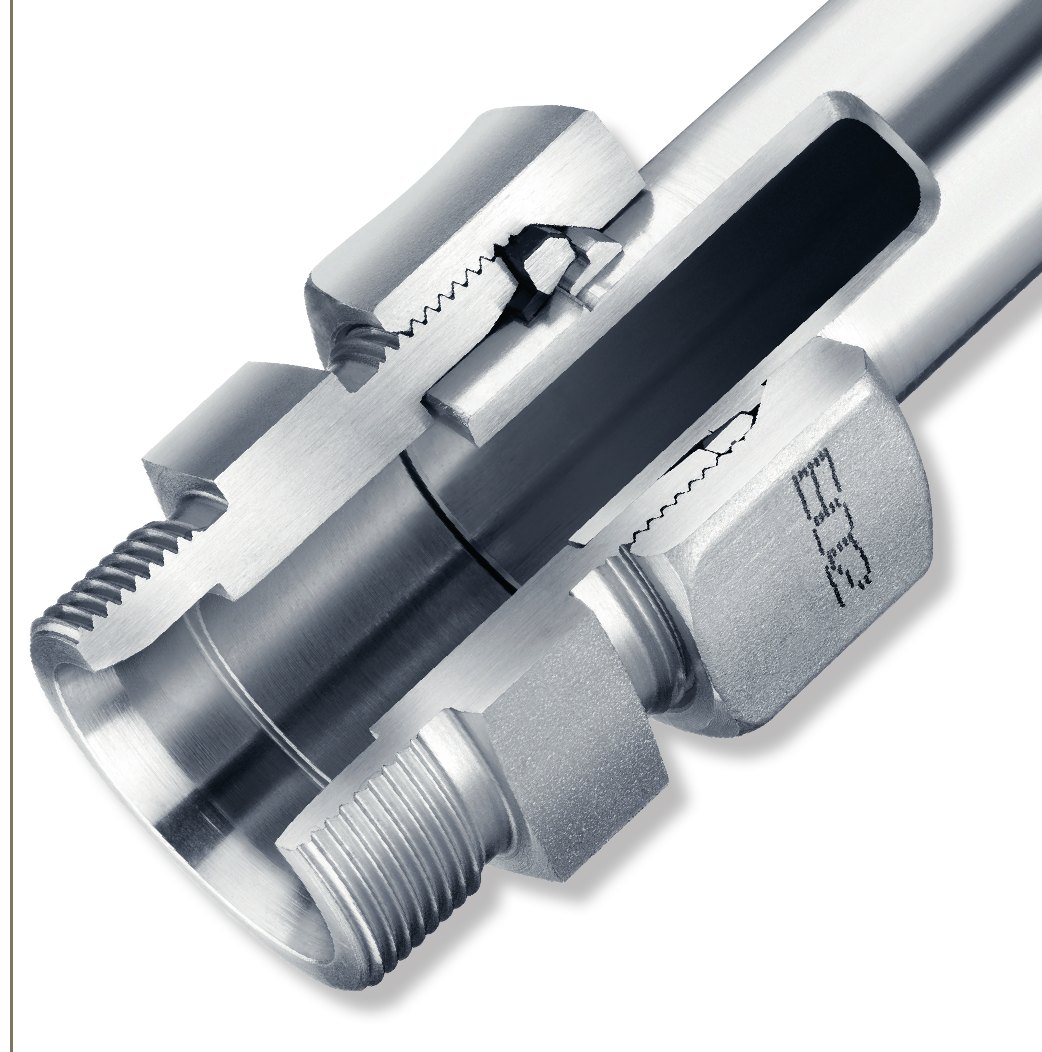
Assembly is not left to judgement either. The fitter screws the nut finger-tight, then turns it a quarter turn to a defined stop point. The stop prevents over-tightening, and the completed joint can be inspected afterwards. The same joint every time, whoever builds it.
Where a cutting ring is not allowed
On some equipment a bite-type fitting is not permitted at all, because the governing safety standard demands a higher tear-out safety than a cutting ring can give. Hydraulic presses. Cranes and lifts. Water hydraulic steelworks and canal locks. Offshore structures. Until now that left welding as the only route.
EO2-FORM is a positive-locking fitting approved for exactly those applications, and a direct replacement for welded connectors in shipbuilding, offshore work and heavy machinery construction.
If you have been told your pipework has to be welded, it is worth a conversation.
Standards and approvals
Everything we form uses genuine Parker EO-2 and EO2-FORM components, manufactured to DIN 2353 and EN ISO 8434-1, with the tube end and nut to DIN 3861 and DIN 3870.
For marine and offshore work, Parker holds a current DNV Type Approval Certificate that covers the EO2-FORM range by name:
| Certificate | DNV Type Approval TAP00000TA, Revision 6 |
|---|---|
| Issued by | DNV, 21 February 2024 |
| Valid until | 31 July 2028 |
| Products covered | EO-D, EO-DPR, EO-PSR, EO-2 and EO2-FORM |
| Sizes | 4 mm to 42 mm |
| Pressure | Up to 800 bar, depending on size, series and material |
| Assessed against | DNV Ship Rules Pt.4 Ch.6, DNV-CP-0185, EN ISO 8434-1 |
| Piping classes | I, II and III |
Other classification societies approve parts of the Parker EO range as well, but coverage differs between societies and between product series, and certificates run on renewal cycles. If your project is governed by a particular society, ask us and we will obtain the current certificate from Parker before you commit to anything.
And one thing we would rather tell you than let you find out later. A type approval belongs to the fitting, not automatically to whoever assembles it. DNV requires the connection to be made with Parker components and assembled to Parker’s own documented procedure, and some societies additionally require the work to be carried out by Parker-trained personnel on Parker-approved equipment. If you need certified assemblies for a classed vessel or structure, tell us at enquiry stage and we will confirm exactly what your society requires before we quote.
Twin Hydraulics Engineering itself is certified to ISO 9001:2015, ISO 14001 and ISO 45001, independently audited by ARS Assessment and valid through 2028, covering engineering consultancy, supply, fabrication and installation. See our certifications.
And the rest of what you get
- The contour is set by the tool, not by a welder’s hand — every joint identical
- No weld to inspect, and no X-ray
- Almost any hydraulic tube material, stainless steel included
- Rated to 800 bar, with chromium-VI-free plating
- FKM seal available for high temperatures or aggressive media
- Tube from 6 mm to 42 mm outside diameter
- One set of fittings covers both — EO-2 and EO2-FORM share the same EO retaining nut and seal
We will hold Parker EO-2 fittings at our Shah Alam workshop alongside the machine, so one set of parts covers conventional cutting-ring work and formed tube ends alike.
How it is done — three steps, not nine
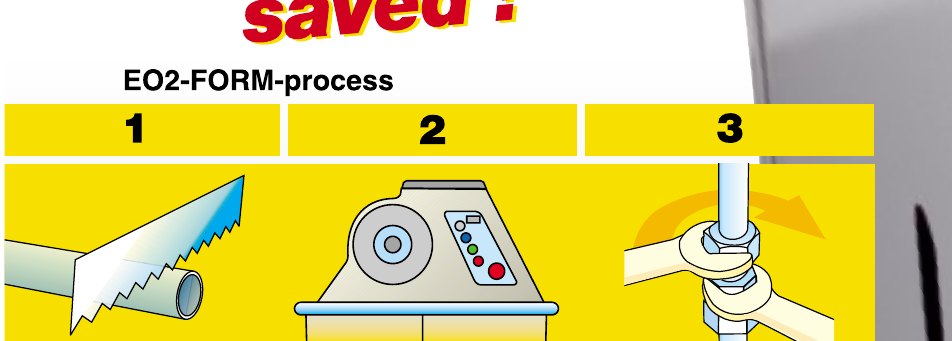
A welded tube fitting is a day’s work in disguise. Cut the tube, prepare and bevel the end, clean it, weld it, let it cool, inspect it, X-ray the weld, pickle and paint what the heat damaged, and only then assemble the joint.
Forming replaces all of it with three: cut the tube, form the end, fit the connector. The forming itself takes about twenty seconds.
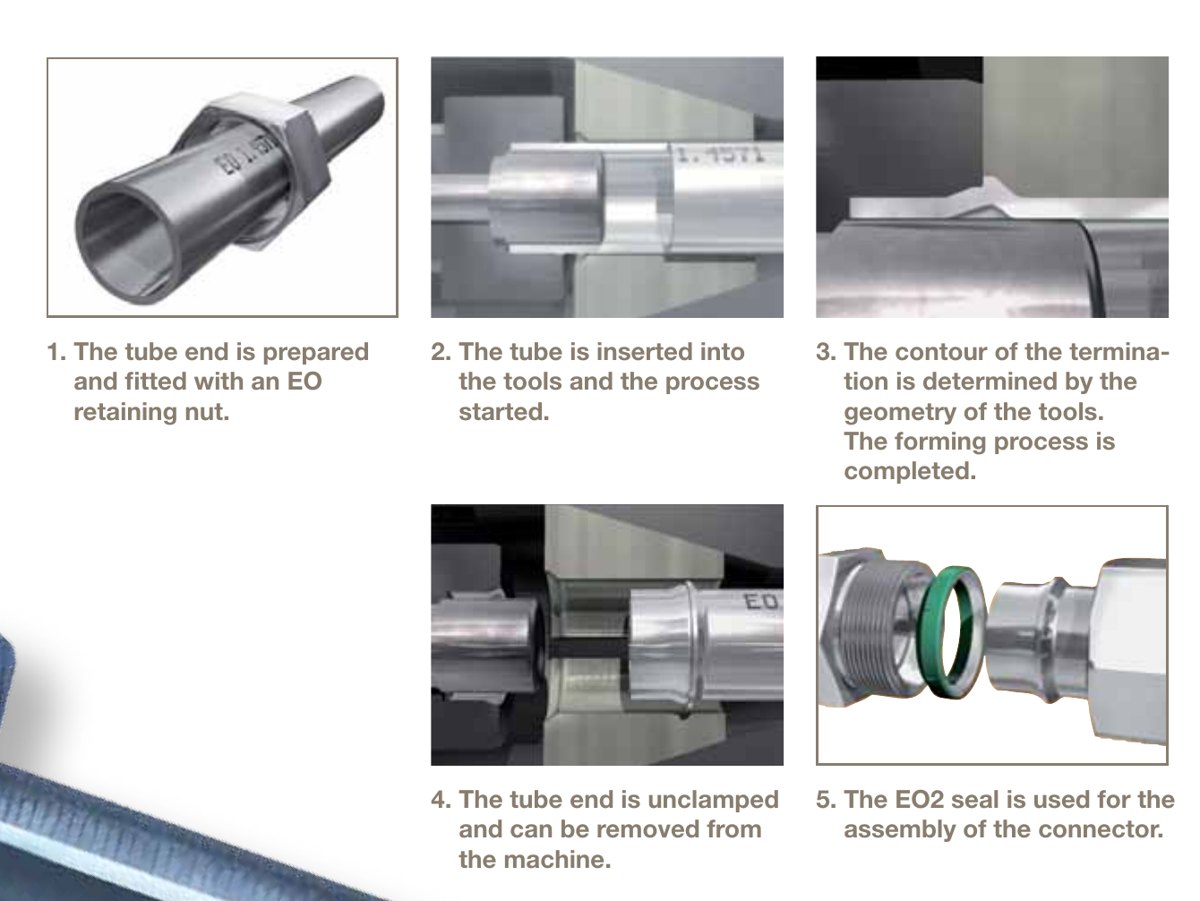
The machine clamps the prepared tube end and compresses it between hardened dies until it takes a profile that matches a genuine Parker EO-2 fitting. The tool geometry determines the contour, so the result is the same every time. Because the deformation is small and closer to a compression than a forming operation, the joint keeps the load capacity and the low tightening torque of a welded connection — without the weld.
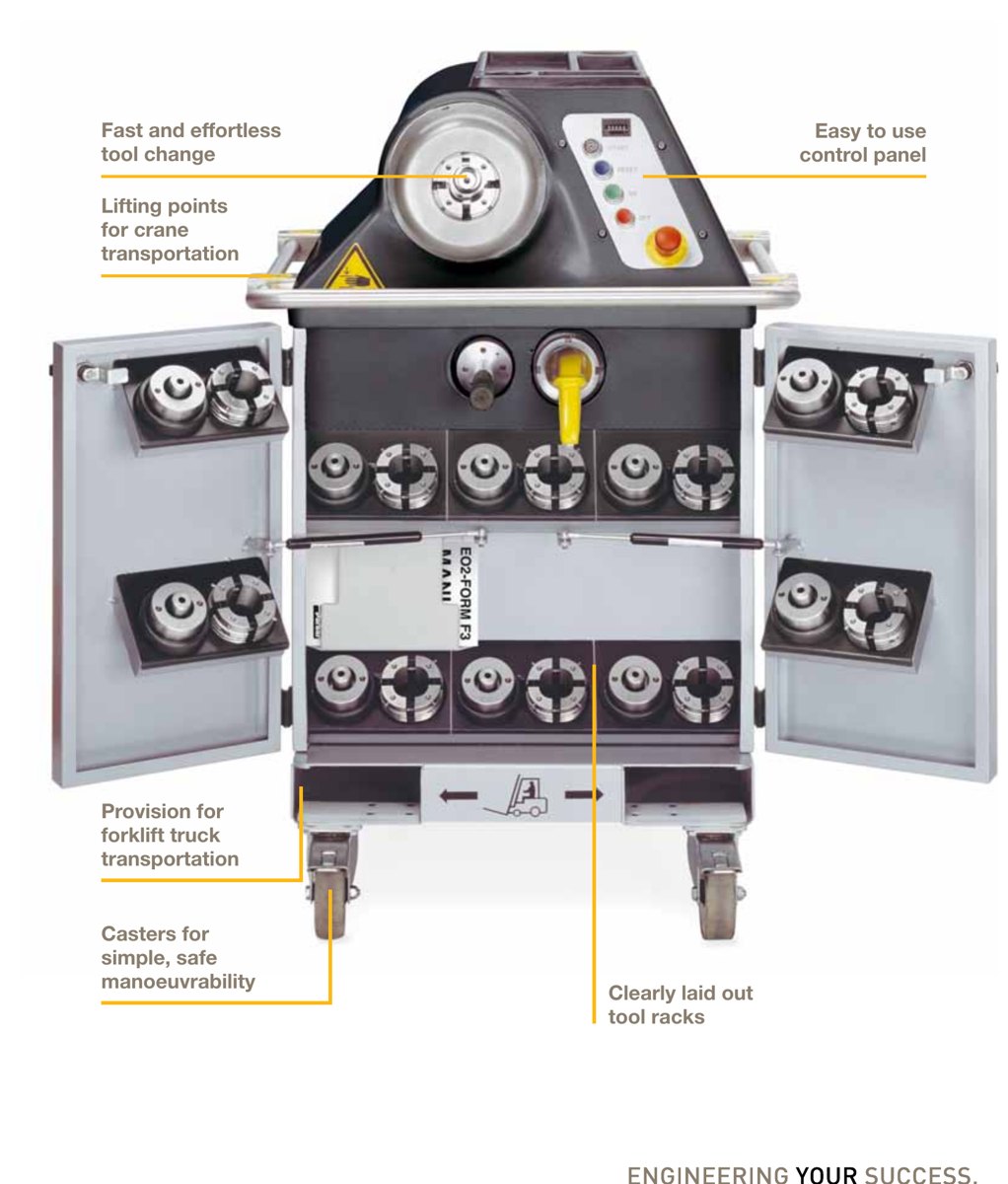
The machine
| Tube sizes | 6 mm to 38/42 mm outside diameter |
|---|---|
| Materials | Almost any hydraulic tube material, including stainless steel |
| Cycle time | Approximately 20 seconds |
| Operation | Fully automatic with tool recognition — one button, one pass |
| Standards | EO-2 components to DIN EN ISO 8434-1 and DIN 2353 |
The operator fits the retaining nut, inserts the tube and presses start; the machine recognises the tool and forms the end in one pass. There is nothing to set and nothing to adjust. The short clamping length lets us form an end close to a bend, so tight pipework is not a problem.
What we can make for you
- Formed tube ends and complete rigid pipework runs, 6 mm to 42 mm
- Replacement of welded fittings on existing machines, without hot work on your site
- Stainless steel tube assemblies
- Parker EO-2 fittings and adapters
- Hydraulic hose assemblies on the largest crimping press in Malaysia, at the same workshop
Between the hose crimper and the forming machine, we can make every line on your machine that carries oil — flexible and rigid — under one roof at Shah Alam.
Talk to us
Send the tube size, wall thickness, material and the fitting you need, or a photograph of the existing assembly. Twin Hydraulics Engineering Sdn Bhd, Shah Alam and Butterworth — 9.00am to 6.00pm, Monday to Friday.


