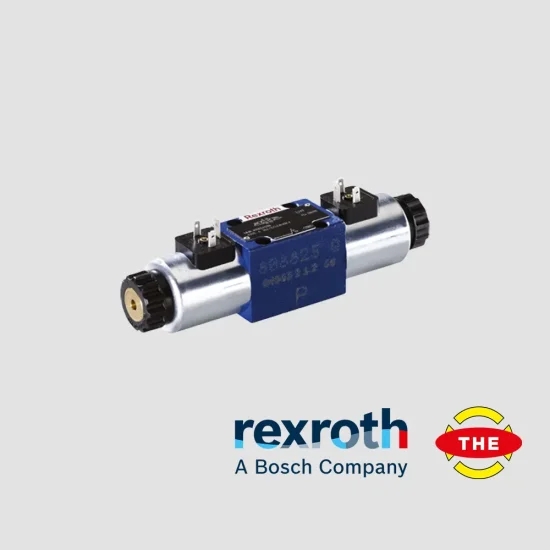
Cartridge valves are the answer when flow outgrows conventional spool valves, or when a machine builder wants many functions in one compact manifold block. The valve drops into a machined cavity rather than bolting to a surface, so a single block can carry a dozen functions with short internal flow paths and low pressure drop.
Typical applications in Malaysia: large presses, die casting machines, steel mill hydraulics, mobile equipment and test rigs. Twin Hydraulics Engineering supplies Rexroth as a Bosch Rexroth Certified Excellence Distributor, and cartridge valves from Parker, Eaton, Danfoss, Yuken, Atos and other makes — which matters more in this category than most, because cavity forms are not universal.
Two families, and more than one standard
Slip-in cartridges, also called logic elements, are retained by a bolted cover and handle the largest flows. The common cavity standard for these is DIN ISO 7368, in sizes NG16 through NG100 and above.
Screw-in cartridges thread directly into the block and cover relief, sequence, counterbalance, check, flow control and smaller directional duties. These do not follow one single standard — each major manufacturer has its own cavity family, and they are generally not interchangeable even at the same nominal size.
This is the most common ordering mistake we see: a cartridge chosen on function and size alone, which then will not seat because the thread and cavity geometry belong to a different manufacturer. Identify the cavity, not just the valve.
How a logic element works
The poppet is held closed by spring force and pilot pressure on its back face. Open the pilot to tank and system pressure lifts the poppet, connecting A to B. Change the cover and the pilot arrangement and the same element becomes a directional valve, a check valve, a pressure relief or a flow control — which is why one cavity size covers so many functions.
Specifying a cartridge
— Cavity form and size — establish this first; it decides what will physically fit
— Area ratio on slip-in elements — commonly 1:1, 1:1.6 or 1:2 depending on directional or pressure duty
— Poppet type — with or without damping nose, which controls switching shock
— Cover — pilot ports, shuttle arrangements, stroke limiters
— Setting range and spring on screw-in pressure valves — often the only difference between two otherwise identical part numbers
Getting the area ratio wrong produces a valve that will not open under load, or one that slams. If you are rebuilding a block, send the element codes and the cover codes together.
Frequently asked
Is DIN ISO 7368 the only cartridge standard? No. It covers slip-in logic elements. Screw-in cartridges follow manufacturer-specific cavity families that are generally not interchangeable, so the cavity has to be identified before anything is ordered.
Can you supply just the element, or the whole cover assembly? Either — tell us what you have and what has failed.
Do you supply manifold blocks? We supply Rexroth standard blocks and can advise on custom manifold design with our engineering team.
How do I identify a cartridge already in a block? Slip-in elements are usually stamped on the flange face and the cover carries its own code. Screw-in cartridges are marked on the hex or the body. Photograph the marking and the block, and tell us the machine make.
My block uses a cavity from a brand you do not normally stock — can you still help? Usually yes. Tell us the block or machine make and we will identify a cartridge that fits the existing cavity, rather than sending you away to re-machine the block.
See also Pressure Relief Valve and Directional On/Off Valve.
Showing 6265–6273 of 7798 results